Using an Insulin Pen
How to Use an Insulin Pen
This information describes how to give an insulin injection (shot) with an insulin pen. It also describes how to store and care for disposable insulin pens. A disposable insulin pen is an insulin pen you throw away when it’s empty or after using it for a certain number of days.
As a CMAII you will use an insulin pen.
- Make sure you know the exact name of the insulin medication you’re using.
- Never draw insulin out of an insulin pen. Doing this could result in the wrong dose, which can be very dangerous.
- Never share an insulin pen with anyone. They’re meant to be used for 1 patient only. Sharing insulin pens could cause an infection. It is also illegal to share medications in healthcare facilities.
About insulin pens
An insulin pen is a device used to give an insulin injection. There are different types of insulin pens. All types have the same basic parts but with different medications in them.
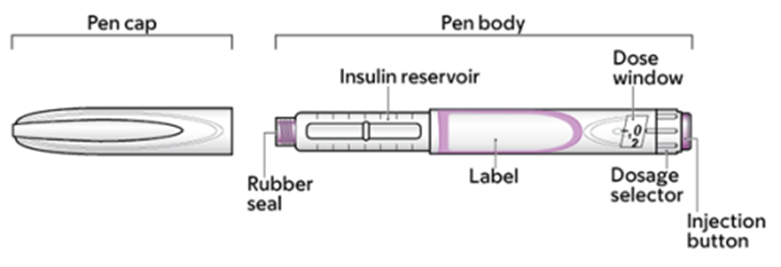
- A pen cap. This protects the insulin when you’re not giving an injection.
- A rubber seal. This is where the pen needle connects to the body of the pen.
- An insulin reservoir. This holds the insulin. There’s a clear plastic area that lets you see the insulin inside the reservoir. You can use this to see how much insulin is left in the pen.
- A label. This tells you the type of insulin in the pen and the expiration date.
- A dosage selector. This lets you dial to the right insulin dose, for the patient
- A dose window. This shows the number of units of insulin selected. There’s an arrow pointing to the number in the middle of the dose window. This is the number of insulin units that will be injected into the patient.
- An injection button. You press down on this to give the injection.
About insulin pen needles
Use a new insulin pen needle each, and every time you give an injection to a patient. Insulin pen needles have 4 main parts.
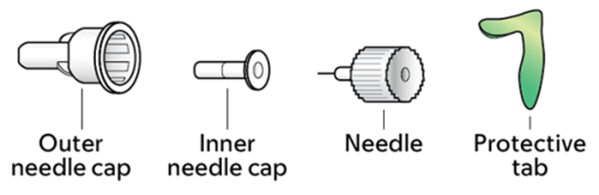
- A protective tab. This helps keep the needle clean. You’ll need to remove this before attaching the needle to the insulin pen.
- An outer needle cap. This covers the needle before and after you use it.
- An inner needle cap. This helps keep the needle clean before it’s used.
- A needle. This is how the injection is given into the skin.
How to store your patient’s insulin pen
Too much heat, cold, or sunlight can damage the insulin pen. Follow the instructions below to store your insulin pens.
- Keep all the patients new, unused insulin pens in the refrigerator.
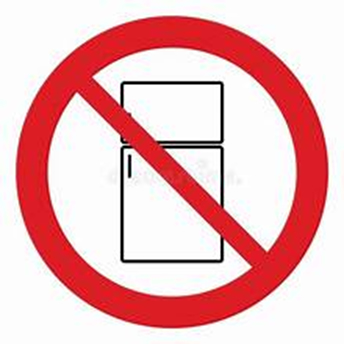
- Keep the insulin pen your patient is using at room temperature (below 86 °F, or 30 °C). Once you use an insulin pen the first time, never put it back in the refrigerator.
- Keep the insulin pen in a secure location on the medication cart.
When to throw away the patients insulin pen
 You’ll use the same insulin pen for the same patient over and over for a certain number of days. The number of days depends on the type of insulin pen your patient was prescribed, and the expiration date provided by the pharmacy at your center.
Whenever you start using a new insulin pen:
- Count ahead the number of days you can use the insulin pen. 27 Days from the day you opened the pen.
- Write the date the pen was opened on the insulin pen itself.
- Once you get to the date of expiration 27 days after the date you opened the pen for the patient, throw away the insulin pen, even if there’s still insulin left. Start using a new insulin pen.
You can keep unused insulin pens in the refrigerator until the expiration date from the pharmacy listed on the pen label. Once an insulin pen reaches the expiration date, it’s expired, throw it away.
When to give an insulin injection
- If your patient is prescribed rapid-acting (mealtime) insulin, It is usually ordered before meals. It’s best to inject it just before your patient starts eating. This helps prevent low blood sugar.
- Follow the Medication Administration Record on when to administer insulin.
- If you’re using long-acting insulin, inject it at the same time every day. Follow your Medication Administration Record or Pharmacies instructions.
- It’s okay to use rapid-acting and long-acting insulin at the same time.
How to give an insulin injection
- Clear off the top of the medication cart.
- The CMAII will need to gather the following supplies:
- A blood glucose monitor and related supplies
- The insulin pen
- A new, unused pen needle
- 2 alcohol swabs
 Clean your hands with soap and warm water..
- Check the patients blood sugar before every insulin injection.
- You’ll need to know the patients blood sugar level to know how much rapid-acting insulin to inject. To figure out your insulin dose, use the insulin sliding scale provided on the Medication Administration Record.
- Even if you’re injecting a set dose of insulin that doesn’t change based on the patient’s blood sugar level, you still need to check your patient’s blood sugar. It’s important to make sure that your patient’s blood sugar level isn’t too low before you give any insulin.
- Write down the blood sugar and document it in the Medication Administration Record.
- Place the lancet you use to test your patient blood sugar in the sharps container.
Get the insulin pen ready
- Check the label on the insulin pen to make sure you have the right insulin pen for the right time and patient.
- Pull the pen cap off the insulin pen. Place the pen cap on the medication cart.

- If you’re using cloudy insulin (such as the HUMULIN N KwikPen), mix the insulin by gently rolling the pen between your hands 10 times and then tipping the pen up and down 10 times. The insulin should look evenly white and cloudy with no lumps or particles. Keep mixing it until you don’t see any clumps.
- Wipe the rubber seal at the top of the insulin pen with an alcohol swab. Throw the alcohol swab away.
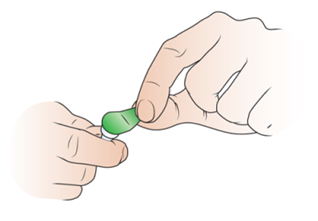
- Take the protective tab off the new pen needle. Throw the tab away.
- Twist the pen needle onto the top of the insulin pen until it stops turning (see Figure 5). Make sure to keep the pen needle straight as you twist it on.
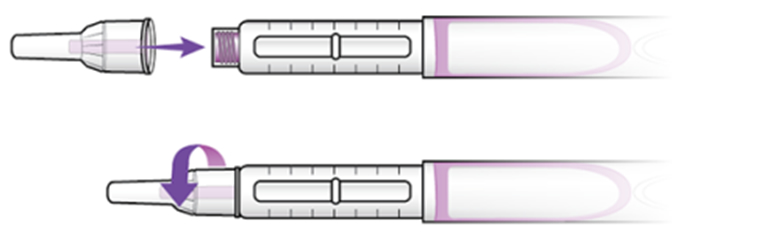
- Take off the outer needle cap. Place it on the medication cart.

- Pull off the inner needle cap. Throw it away.
Do a safety test (prime the pen)
It’s important to do a safety test before every insulin injection. The safety test makes sure the insulin pen and needle are working correctly. It also removes air bubbles and fills the needle with 2 units of insulin so you get the full dose.
- Hold the insulin pen so you can read the patient’s name on the insulin. Looking at the dose window, dial to 2 units by turning the dosage selector forward. The arrow in the middle of the dose window should line up exactly to the dose you’re giving. If you dial past 2 units, turn the dosage selector back until you’re at 2 units

- With the needle pointing up, press the injection button firmly against the table or with your thumb. Look for drops of insulin to come out the tip of the needle.
- If no insulin comes out, dial to 2 units and press the injection button again.
- If insulin still doesn’t come out, dial to 2 units and press the injection button again.
- If insulin still doesn’t come out, put the outer needle cap back on the needle. Twist the needle off the insulin pen and put it in the sharps container.
- Put a new needle on the insulin pen and repeat steps 8 to 14.
Set the insulin dose
- Make sure the dose window shows zero. If it doesn’t, turn the dosage selector back until it shows zero.
- Turn the dosage selector forward to dial to the dose you’re giving. The arrow should be lined up exactly to the dose you’re giving.
- If you can’t dial to the number of units you need, the insulin pen is probably almost empty. Throw it away and get a new one from the refrigerator so you can inject the full dose at once. Do not inject partial doses or split the dose into 2 injections.
Choose an injection site
Inject insulin into the fatty tissue just under your skin. Avoid injecting insulin into your patient’s muscle.
Choose one of the following injection sites:
- Your abdomen (belly), except for the 2-inch area around the belly button. If you’re injecting rapid-acting insulin, this is the best site to use.
- The upper and outer part of your thighs. If you’re injecting long-acting insulin, this is the best site to use.
- The upper outer part of your buttocks (butt).
The back part of your upper arms.
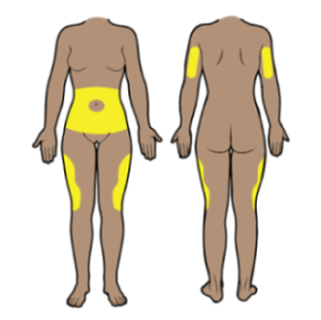
- Keep track of the injection site you use. Rotate (change) the injection sites with each injection. Within each injection site, always inject 1 to 2 inches (2.5 to 5 centimeters) away from the last place you injected. This can help you avoid soreness and scar tissue. Document on the Medication Administration Record the site you gave the injection.
- Inject at least 2 inches away from any incisions (surgical cuts), scars, or stretch marks. Don’t inject into an area that’s tender, red, bruised, or hard.
Give the insulin dose
- Use a new alcohol swab to gently clean your skin at the injection site.
- Hold the insulin pen in your fist with your thumb on the injection button (see Figure 10). Be careful not to push down on the injection button before you push the needle into your patient’s skin.
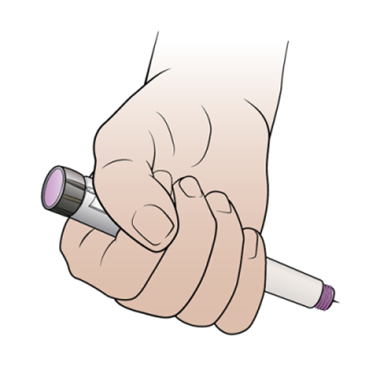
- Gently pinch up your patient’s skin at the injection site. In one smooth, quick motion, push the whole needle into your patient’s skin at a 90-degree (straight up and down) angle. Push gently so you see a small dimple in your patient’s skin around the tip of the pen.
- Push the injection button down firmly, being careful not to press the pen into your patient’s skin more. Once you press the button all the way down, keep holding it down and slowly count to 10. This gives the insulin time to come out of the pen. You should also see the numbers in the dose window go back to zero.
- After you count to 10, take your thumb off the injection button and pull the needle straight out of your patient’s skin. Never rub the injection site after the injection. This can make the insulin work too fast. If you see a drop of blood after the injection, press the area lightly with a tissue.
After the injection
- Put the large outer needle cap back on the needle. Don’t put the small inner cap back on.
- Unscrew the needle from the insulin pen. Twist it off in the opposite direction you put it on
- Put the needle in your sharps container.
- Put the pen cap back on the insulin pen.
- Store the insulin pen in the medication cart. Not the refrigerator.